The Family Emergency Financial File: What to Include and How to Store It
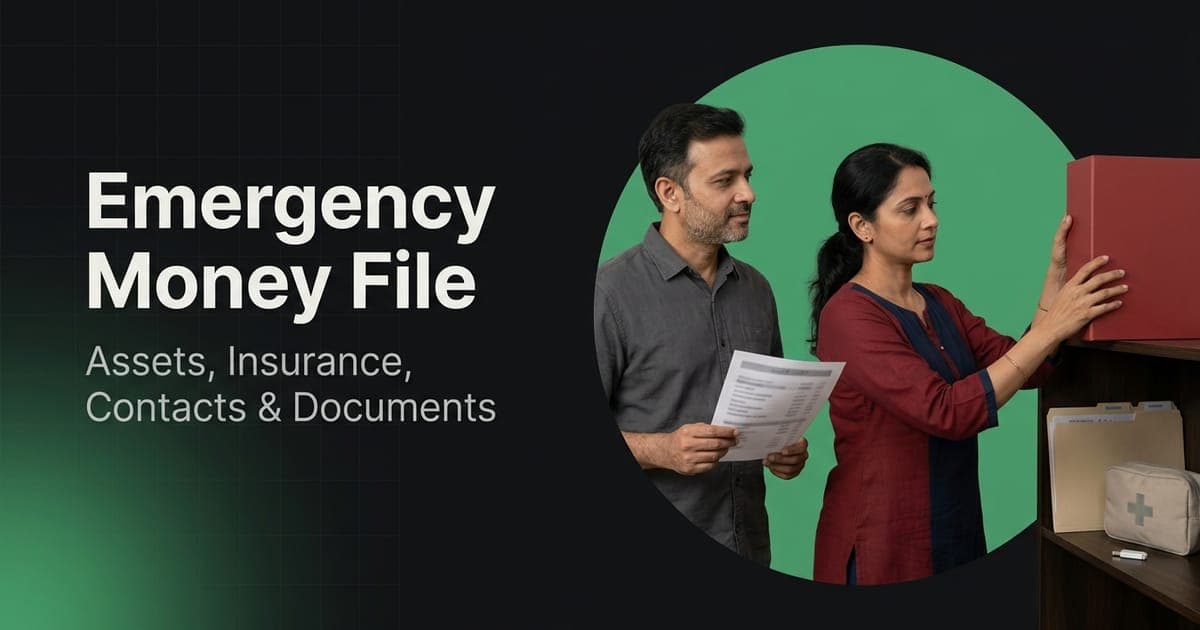
In an emergency, like a hospital admission or an accident, someone in the family may have to handle money matters quickly. This is hard if they do not know where things are.
An emergency financial file is one folder that gives them the information they need. This post explains what to put in it, what to leave out, how to store it, and how to set one up in 60 minutes.
What the file is, and what it is not
The file is a guide to your family's money. It tells someone which accounts exist, which policies cover whom, what bills are due, and where the important documents are.
It is not:
- A copy of every document you own
- A place for passwords or PINs
- A replacement for a will
- A way for someone to take over your accounts
It should be the first thing a family member opens in an emergency, and it should tell them where to start.
1. Asset and liability index
A simple list of what the family owns and owes:
- Bank accounts and FDs (bank, type, last four digits, nominee)
- Mutual funds and demat accounts (fund house or broker, nominee)
- PPF, EPF, NPS and post office schemes
- Gold and property
- Loans and credit cards (lender, EMI, due date)
Our family financial inventory guide has a full table you can use for this section.
2. Insurance, account and institution contacts
In an emergency, insurance is usually the first thing needed. Put it near the front.
| Policy | Insurer | Policy no. (last 4) | Who is covered | Claims helpline | Nominee |
|---|---|---|---|---|---|
| Health floater | |||||
| Term life | |||||
| Group cover (employer) |
Also list contacts for the bank branch, CA, employer HR and any financial adviser.
3. Recurring payments and obligations
The household bills still need to be paid. List:
- Rent or home loan EMI and its date
- School fees
- Utilities and phone bills
- Insurance premiums
- SIPs and other auto-debits
- Any support you send to parents or relatives
If the earning member is unavailable, this list tells the family what must be paid and what can wait.
4. Legal documents and where originals are
You do not need the originals in the file. Note where they are:
- Will, and the executor's name
- Property documents
- Power of attorney, if any
- Marriage and birth certificates
- Bank locker details and who has the key
5. Medical information
This is often left out of financial files, but it is needed at the same time:
- Blood group and known allergies
- Current medicines
- Regular doctor and preferred hospital
- Health insurance card and TPA details
What not to include
No passwords, PINs, OTPs or security answers. Keeping them in a file is risky. And in an emergency, the right path is the institution's own process, not logging in as someone else.
Also leave out full card numbers and CVVs. The last four digits of an account are enough to identify it.
Secure digital storage and a physical backup
Keep two versions:
- Physical: a clearly labelled folder in a known, safe spot at home. A fireproof box is a good idea.
- Digital: scans in an encrypted or password-protected folder. Government documents can be kept in DigiLocker.
Tell at least one trusted family member where both are. If the digital folder needs a password, decide how that person will get it when needed, for example a sealed note with your will or with a lawyer.
Who should have access
Usually two people are enough: your spouse and one other adult, maybe a sibling or grown-up child. Write their names on the inside cover of the file so it is clear who it is meant for.
If you live away from family, make sure someone nearby knows the file exists too.
Review it every quarter or every year
A quick check every three months keeps it useful. A full review once a year is the minimum. Update it straight away after:
- A new policy or loan
- A change of job or bank
- A marriage, birth or death
- A move to a new city or country
A 60-minute setup plan
You can get a working first version done in one hour.
| Minutes | Task |
|---|---|
| 0 to 10 | Get a folder and print the templates above |
| 10 to 25 | Fill in insurance and medical details |
| 25 to 40 | List bank accounts, investments and loans |
| 40 to 50 | List recurring payments and due dates |
| 50 to 55 | Note where legal documents are kept |
| 55 to 60 | Tell one person where the file is |
It does not need to be perfect. A simple file now is better than no file.
If your parents need a file too, the financial checklist for ageing parents covers what to gather for them.
If you want a quick one-hour plan to get started, read how to make sure your family can find your investments.
Frequently Asked Questions
Where should I keep the emergency financial file?
Somewhere safe at home that your family can reach quickly, like a labelled folder in a cupboard or a fireproof box. A bank locker is less useful because it may not be accessible in an emergency.
Is a digital-only file enough?
It can work, but a physical copy is a good backup in case nobody can unlock your devices. Many families keep both.
How is this different from a will?
The file shows what exists and where. A will decides who inherits it. You need both.
Should each family member have their own file?
You can keep one household file with a section for each person. Parents living separately may want their own.
Want to see what is missing from your family's records? The free Family Health Check takes two minutes and needs no sign-up.
Your family's money,
finally in one place.
See every member's investments together, plan goals as a family, and make sure nothing gets lost when it matters most. Each member approves what they share.
Free 2-minute check · No sign-up needed for the check
Related articles
All Nominees & Family Continuity guides →
How to Review Nominees Across Your Family's Financial Accounts
A step-by-step way to check nominees on bank accounts, FDs, mutual funds, demat, insurance, EPF and PPF in India, with a nominee review tracker you can copy.
Read more →
If Something Happens to You, Will Your Family Find Your Investments?
If you are the one who handles the money, your family may not know what you own. Here is a one-hour plan to make sure they can find your investments.
Read more →
How Can a Family Find Mutual Funds After an Investor Dies?
Lost a parent and not sure what mutual funds they held? How to find a deceased person's mutual funds in India using statements, CAS, MITRA and fund house claims.
Read more →