How to Help Elderly Parents Manage Money Without Taking Away Their Independence
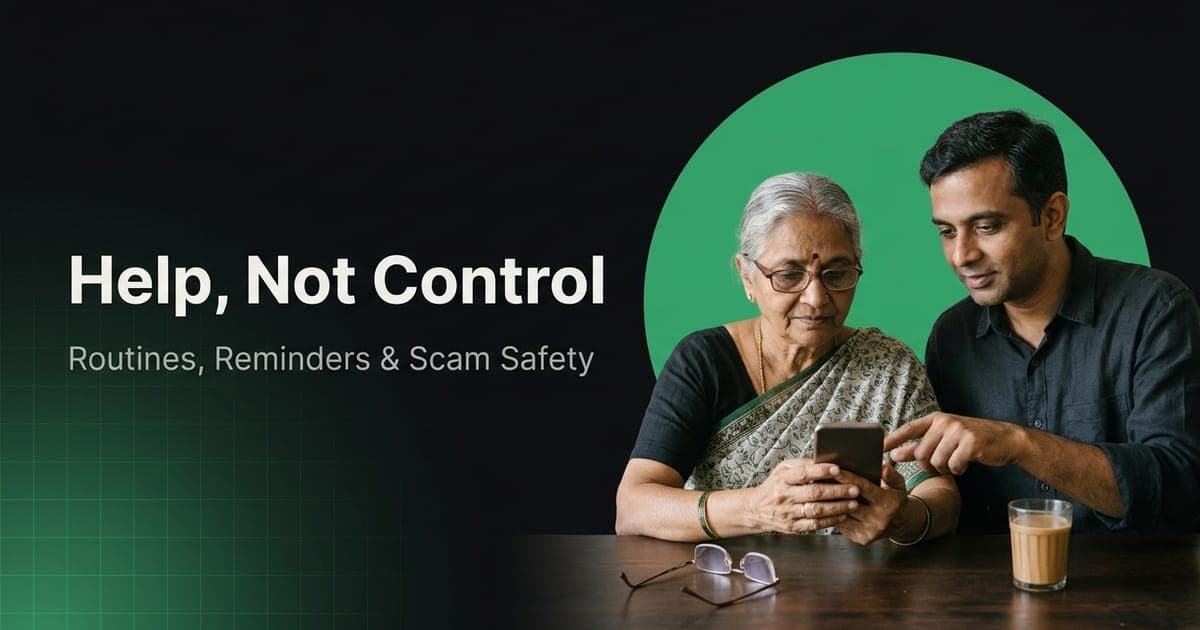
As parents get older, some money tasks become harder. They may forget FD renewal dates or get confused by bank messages and scam calls. You want to help, but they may not want to give up control.
This post shows how to help in a balanced way, so your parents get support but stay in charge of their own money.
Start with respect and consent
Your parents have managed a home and saved money for many years. Losing control over money can make them feel less respected.
So begin by asking, not telling. "Would it help if I set up reminders for your FDs?" sounds very different from "I'll handle your FDs from now on."
Let them decide:
- What they want help with
- What they want to keep doing themselves
- What they want to keep private
Offer help with organisation before control
The safest place to start is organisation. It is useful, it does not touch their decisions, and it builds trust.
- Help make a list of accounts, FDs, policies and investments
- Set up a simple file for documents
- Note renewal and maturity dates on a calendar
- Write down important phone numbers
None of this moves money or changes anything. It just makes life easier. Our guide on organising parents' financial documents shows how to set up a simple system.
Set up reminders and a simple monthly review
Many money problems for older parents come from missed dates, not bad decisions. Simple reminders help a lot.
- FD maturities: a reminder two weeks before
- Insurance renewals: a reminder a month before
- Life certificate for pensioners: every October or November, depending on age and scheme
- Property tax and bills: on their due dates
Then sit together for about 15 minutes once a month. Look at the bank SMS, any letters, and what is coming up. Your parent stays in charge. You are only there to help them check.
Reduce paperwork and app trouble
Banking apps, OTPs and changing interfaces can be frustrating. A few small changes make a big difference:
- Turn on SMS alerts for every transaction on their accounts
- Reduce the number of accounts if they have many small, unused ones
- Switch statements to one email address they actually check
- Ask the bank about doorstep banking, which many banks offer to senior citizens
- Write simple step-by-step notes for the one or two app tasks they do often
Closing extra accounts is their call, but many parents are glad to have fewer things to track.
Recognise scams without creating fear
Older people are frequent targets of financial fraud. Common ones include fake KYC update calls, "your account will be blocked" messages, fake courier or customs calls, and callers pretending to be police.
Talk about this calmly. The goal is caution, not fear. A few family rules help:
- No bank will ever ask for an OTP, PIN or password on a call
- Never click links in SMS or WhatsApp messages about bank accounts
- If someone says it is urgent, hang up and call a family member first
- Never install an app because a caller asked you to
If something happens, call the national cybercrime helpline 1930 quickly and report it at cybercrime.gov.in. Inform the bank too.
Agree on who can see what
As you help more, be clear about access. Write it down if it helps.
| Level | What it means |
|---|---|
| Information | You know what accounts exist and where documents are |
| View | You can see balances or investments with their permission |
| Help | You assist with tasks while they do the transaction |
| Act | You transact on their behalf through a joint account, mandate or PoA |
Most families do well at the first three levels for a long time. Moving to the fourth needs proper legal arrangements, and it should be your parent's decision.
Avoid shortcuts like taking their net banking password. It may seem easy, but it is unsafe and against bank rules.
When to bring in professional or legal help
Some situations need more than family help:
- A parent shows signs of memory loss or confusion about money
- There is a family disagreement about who should help
- Property or large investments need to be sold
- The will needs updating
A lawyer can advise on a power of attorney, which lets a chosen person act for your parent. It is best set up early, while your parent can clearly understand and consent. It is much harder to arrange in an emergency.
Conversation starters that work
Not sure how to bring it up? Try one of these:
- "If you were in hospital for a week, what would I need to take care of?"
- "Can you show me where you keep the important papers, just so I know?"
- "Would a reminder for your FD dates be useful?"
- "I got a scam call today. Has anyone tried that with you?"
- "Is there anything about money that worries you right now?"
Start with one. You do not need to cover everything in one go.
For a full list of what to go through together, see our financial checklist for ageing parents.
For a step-by-step process, see our practical guide to managing your parents' finances in India.
Frequently Asked Questions
How do I know when my parents need help with money?
Look for missed payments, unopened letters, confusion about balances, repeated questions, or unusual transactions. Any of these is a sign to offer help gently.
What if my parent refuses help?
Respect it, stay involved and keep offering. Focus on low-pressure help like reminders or scam awareness. Most parents accept more help over time once they see it does not mean losing control.
Should I become a joint holder on my parent's account?
It can be useful, but it changes ownership and access. Discuss it with your parent and siblings, and understand the bank's terms first.
What can I do if a parent has been scammed?
Call 1930 and report at cybercrime.gov.in straight away, and inform the bank to block further transactions. Then help your parent change any compromised details.
If you would like a quick view of where your family stands, try our free Family Health Check. It takes two minutes and asks nothing about amounts or account numbers.
Your family's money,
finally in one place.
See every member's investments together, plan goals as a family, and make sure nothing gets lost when it matters most. Each member approves what they share.
Free 2-minute check · No sign-up needed for the check
Related articles
All Parents' Finances guides →
How to Manage Your Parents' Finances in India: A Practical Guide
A step-by-step guide for adult children on managing parents' finances in India: the first talk, a master list of accounts, nominees, documents and reviews.
Read more →
How to Organise Your Parents' Financial Documents in One Place
A parents' financial documents checklist with a simple folder system, a document index template and a 30-minute routine to keep everything in one place.
Read more →
The Financial Checklist Every Family Should Complete for Ageing Parents
A complete financial checklist for ageing parents in India: accounts, pension, insurance, loans, nominees, KYC, documents and a yearly review you can follow.
Read more →